
Lip Liner Cartons: State the Count Basis
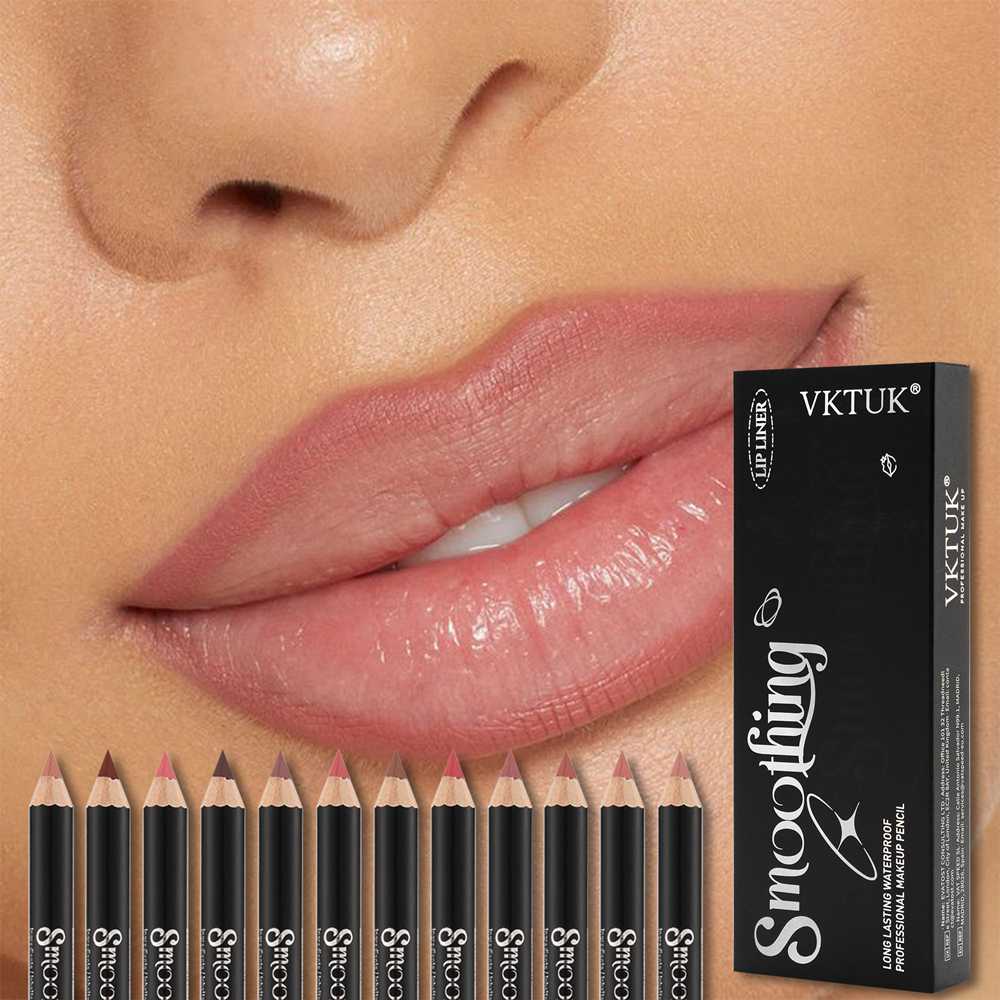
State whether a lip liner quotation counts individual pencils or complete retail units, then ask the supplier to confirm each conversion through the inner pack and shipping carton. Put the counting unit beside every quantity. A photograph showing pencils and a printed carton can identify a packing concept, but it does not establish the supplied contents, pack multiplier or shipping-carton quantity.
The first quantity question is what one unit means
A request for a quantity of lip liners can be understood as pencils, retail packs or cartons. Each interpretation may be internally consistent, yet produce a different quotation and receiving expectation. Name the counting unit before asking the supplier to fill in packing quantities. The useful starting question is simple: what physical item does one ordered unit represent in this offer?
Jling’s Black Body Wood Lip Liner gallery includes a pencil array beside a printed carton. That photograph is a relevant packing reference for an inquiry, but the arrangement does not prove that every pictured pencil belongs inside the illustrated carton. Ask the supplier to connect the proposed product and packing version to an explicit contents statement. Catalogue lettering and promotional wording do not replace that statement.
Build the conversion chain from pencils to shipping cartons
Define the individual pencil first. Then define the retail unit, if one is requested, and ask how many pencils belong to it. Continue to the inner packing level and shipping carton only where those levels actually apply. Do not invent an inner pack because a spreadsheet contains an inner-pack column. If the supplier’s arrangement has no such level, record it as not applicable rather than entering a guessed multiplier.
A complete conversion should let another person work in either direction: from an ordered retail-unit quantity to the corresponding pencil total, or from the packing list back to the saleable units received. Leave the values for supplier confirmation. The procurement requirement is consistency between the named units and the proposed arrangement, rather than a particular pack size inferred from a photograph.
Counting level | Item identifier | Quantity basis | Supplier confirmation
Individual pencil | Agreed pencil version | Pencils represented by the order | Exact contents and item reference
Retail unit | Proposed retail packing reference | Pencils per retail unit, if used | Contents and whether packaging is included
Inner pack | Supplier’s inner-pack reference | Named units per inner pack, if used | Conversion or not-applicable statement
Shipping carton | Agreed shipping packing reference | Retail units or inner packs per carton | Named level and conversion
Order total | Purchase-order line | Ordered unit plus equivalent pencil total | Reconciliation with the packing proposal
Compare quotations on equivalent quantities
Two offers cannot be compared fairly if one quotes a pencil and the other quotes a packed retail unit. Put the quoted unit next to the price field and identify whether the requested packaging belongs to that unit. If the supplier provides separate packaging charges, keep them separate until the supply scope is clear. Do not assume that a carton in a catalogue means its cost is included.
Keep empty packaging and filled units distinct. A quotation for printed retail cartons may refer to empty cartons, while a product quotation may refer to pencils supplied in a different arrangement. Ask who is responsible for the stated packing activity and what the buyer will physically receive. Confirming this boundary is useful even before the final order quantity has been selected.
Check totals without confusing allocation and pack structure
An order may allocate quantities among item references or shades, but that allocation is a separate field from the packing conversion. A change in the allocation does not, by itself, tell you that the number of pencils per retail unit has changed. Ask the supplier to show any effect on the proposed packing arrangement explicitly. This keeps the arithmetic understandable without turning the packing discussion into a shade-selection exercise.
Use named quantities when reconciling the response. Multiply the confirmed number of pencils per retail unit by the number of those retail units to obtain the equivalent pencil total. Apply inner-pack and carton conversions only to the levels the supplier has confirmed. If a partial carton or mixed arrangement is proposed, ask how it will be identified on the packing list instead of forcing it into a standard-carton assumption.
• Keep the ordered unit, packing conversions and equivalent pencil total in separate labelled fields.
• Ask the supplier to identify empty packaging separately from filled retail units.
• Reconcile mixed or partial packing arrangements against the actual packing proposal before approval.
Carry the count basis into the purchase and receiving records
The purchase order should reference the accepted packing proposal and use the same unit names as the quotation. A packing list should then identify quantities at those agreed levels. If one document says units and another says pieces, ask which physical item each term means before accepting the conversion. Familiar abbreviations can hide a disagreement about whether the count refers to a pencil or a complete retail pack.
At receiving, compare the stated retail-unit and pencil totals with the approved basis, while keeping any separate inspection requirements intact. Count reconciliation does not establish cosmetic quality, material authenticity or the truth of promotional claims printed on a carton. For a reorder, retain the accepted conversion reference and ask the supplier to disclose changes in packing level or contents. An unchanged product photograph is not confirmation of unchanged packing.
Frequently asked questions
Does the illustrated carton contain every pencil shown beside it?
The photograph does not establish that relationship. Ask for the contents of the proposed retail unit and the corresponding supplier item reference. Treat the array as a catalogue presentation until the packing statement is confirmed.
How should one retail unit be defined in the RFQ?
State the requested product and packing arrangement, then ask the supplier to confirm the pencil contents and whether the packaging is included. Keep the definition beside the ordered quantity so that it cannot be confused with an individual-pencil count.
Should a mixed allocation change the pack multiplier?
Only if the supplier confirms a different packing arrangement. Item allocation and units per pack describe different things. Record a proposed change to either field explicitly, then reconcile the resulting order total.
Can the buyer use a catalogue image to set carton dimensions or quantity?
No. Request those details for the proposed packing version. The image is useful for identifying the concept, but it does not independently establish dimensions, carton contents, minimum quantities or delivery terms.
Product and contact references
Black Body Wood Lip Liner packing reference: https://jlingcosmetics.com/product/black-body-wood-lip-liner/
Jling product catalogue: https://jlingcosmetics.com/products/
Jling purchasing contact: https://jlingcosmetics.com/contact/
Jling blog: https://jlingcosmetics.com/blog/