
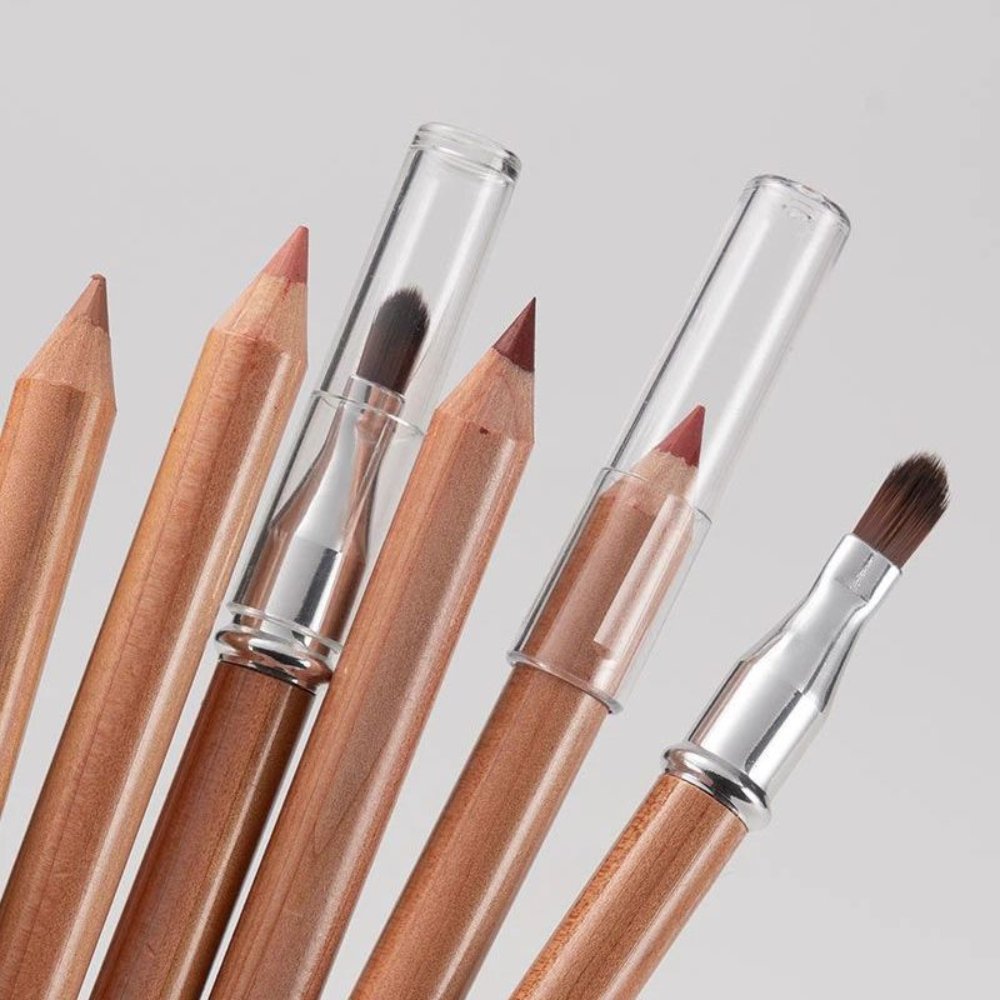
Brush-End Lip Liners: Define the Supplied Parts
Define a brush-end lip liner order with a component list linked to an annotated product view. Ask the supplier to confirm the pencil end, brush end, closures and assembly state included in each quoted unit. Treat loose caps and uncapped views in a catalogue as identification references until their supply status is confirmed; a grouped photograph is not a bill of supplied parts.
Turn the catalogue view into a supply-scope question
A brush-end cosmetic pencil photograph may show a capped item, an exposed brush and a separate cap together. Those views help explain the design, but purchasing still needs to establish which objects form the saleable item. Ask the supplier to identify the proposed version and distinguish its components from photographic display pieces. This prevents a visual explanation from becoming an assumed inclusion in the purchase order.
Jling lists Wood Lipliner With Brush as a product reference. Its gallery shows wood-pattern pencil bodies, brush ends and transparent caps in different arrangements. These visible features provide a useful basis for an annotated inquiry. They do not independently identify wood species, bristle composition, dimensions or the components supplied under a particular quotation. Keep those questions attached to the selected item reference.
Define the quoted unit before comparing offers
Begin the request with a plain description of what the buyer intends to receive. If the desired item is an assembled pencil with a brush end and closures, state that as the requested scope and ask for confirmation. Do not write ‘as pictured’ as the entire specification. A supplier may use the same catalogue image to explain several versions, or quote a component arrangement different from the one the buyer had in mind.
Keep the unit description beside the quoted quantity and price field when comparing supplier responses. A completed assembly and a set of loose parts are different supply scopes even if both can be described as a brush-end lip liner. Ask the supplier to identify any optional component, substitution or excluded item directly. A blank field should remain an open question until someone answers it.
Visible component | Included or optional | Assembly state | Supplier reference
Pencil body and writing end | Supplier to confirm proposed version | State received condition requested | Annotated item view
Brush end | Confirm inclusion in the quoted unit | Fitted or supplied separately, as confirmed | Named end and component reference
Writing-end closure | Confirm supplied closure, if applicable | Fitted or loose, as confirmed | Cap identified in the marked view
Brush-end closure | Confirm which pictured closure is included | Fitted or loose, as confirmed | Corresponding brush-end view
Separate display objects | Identify anything excluded from supply | Catalogue illustration only where indicated | Supplier’s explicit exception
Give each end an unambiguous name
An inquiry can become confusing when people call both ends the front, the top or the main end. Name the writing end and the brush end on the same reference view. Then identify each closure against the end it is intended to cover. If the supplier uses its own component names, retain them alongside the buyer’s labels so that neither team has to guess which part an email describes.
Request views that connect the exposed ends to the assembled item. A close-up of a loose brush does not, by itself, establish how it is supplied with the pencil. Ask the supplier to explain the relationship in the proposed version. This is a procurement identification task, rather than an assumption about fit, attachment strength or performance. Any assembly requirement should be confirmed explicitly for the item being quoted.
Keep composition and cosmetic claims outside the visual approval
A wood-pattern body and a visible brush are appearance references. If the order depends on a particular body material or bristle composition, request the supplier’s specification and identify the exact component it covers. Do not convert the catalogue product name into an independent material verification. The buyer can keep an acceptable visual reference while leaving an unanswered composition field open.
The same separation applies to the cosmetic content and its claimed effects. Confirming a component arrangement does not establish ingredient suitability, allergy status, waterproof performance or any wear claim. Those matters require their own applicable information and review. An assembly approval should say what it actually covers, so that the purchasing team does not unintentionally treat a photograph as approval of unrelated product properties.
• Mark the writing end, brush end and each proposed closure on a shared view.
• Ask whether every marked part is included and whether it arrives fitted or loose.
• List material, cosmetic-content and performance questions separately from the component arrangement.
Use the accepted component list at receiving and reorder
When reviewing a returned sample, use the component list to record which requested parts are present and how they are arranged. If the sample represents only part of the proposed supply, ask the supplier to identify that limitation. Keep the assembly description and the sample reference together. Otherwise, a person who sees the sample later may assume every detail was accepted for the order.
For receiving, the accepted list gives the team a practical identity check: the item reference, included components, closures and delivered assembly state. It does not replace a separate inspection plan or prove the function of each part. For a repeat order, send the accepted list back with the item reference and ask the supplier to disclose any proposed change. A familiar product name alone should not authorise a different closure or assembly arrangement.
Frequently asked questions
Is every cap visible in the catalogue supplied with the pencil?
Not necessarily. A photograph may include different views or display components. Ask the supplier to mark which closures belong to the quoted item and whether each arrives fitted or separately packed.
How can a buyer distinguish the brush end from the writing end?
Label both ends on one agreed product view and retain the supplier’s corresponding names. Use those labels in the component list, sample comments and quotation so that an exposed-end photograph cannot be misinterpreted.
Does the Wood Lipliner With Brush image establish bristle material?
No. It identifies a visible brush arrangement. Composition, dimensions and any required material evidence should be requested for the exact component and version; they cannot be confirmed from its appearance alone.
What should happen if a sample arrives without a requested component?
Record the difference against the component list and ask whether it is a sample limitation or a proposed change in supply. Keep the question open until the supplier confirms the scope. Do not silently revise the purchase order to match an unexplained sample.
Product and contact references
Wood Lipliner With Brush product reference: https://jlingcosmetics.com/product/wood-lipliner-with-brush/
Jling product catalogue: https://jlingcosmetics.com/products/
Jling purchasing contact: https://jlingcosmetics.com/contact/
Jling blog: https://jlingcosmetics.com/blog/