
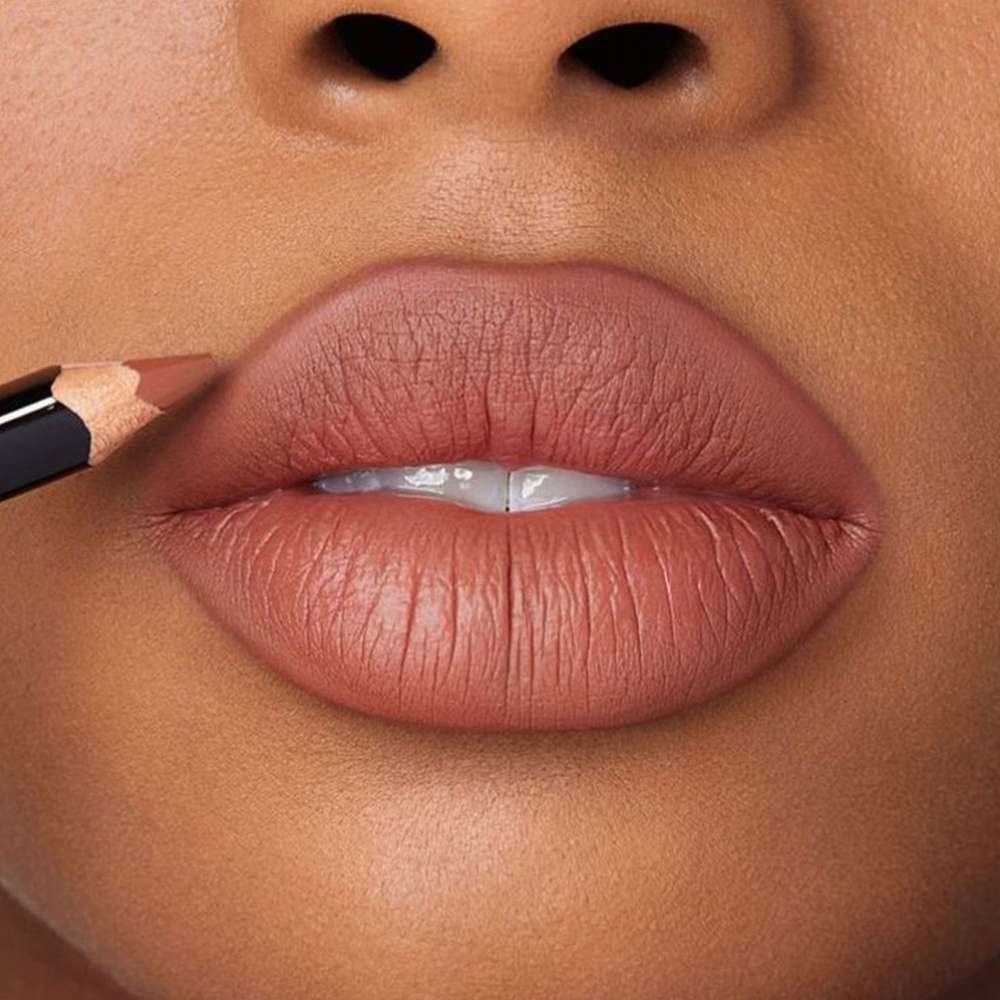
Link each lip liner order row to the supplier’s exact shade identifier and an agreed swatch or sample reference. Keep buyer codes, supplier codes and catalogue colour descriptions in separate fields until their relationship is confirmed. A cap colour, a screen photograph or a familiar shade name does not establish an exact product match. Leave unclear code equivalences open before accepting the affected order line.
A shade can acquire several descriptions as an enquiry moves between purchasing, product and artwork teams. A buyer may use an internal assortment code, the supplier may use another identifier and a catalogue photograph may carry a colour name. A crosswalk helps those teams discuss the same proposal without treating similar-looking references as automatically interchangeable.
Start with the exact pencil reference
The retained official Jling product reference for this task is Black Body Wood Lip Liner. Its catalogue description identifies a black-body pencil design and supplier-described colour identification involving the cap and core. Use the exact product link to identify the enquiry, then ask the supplier which shade identifiers apply to the quoted variant. The description does not establish the current availability of a particular shade.
Product reference:
https://jlingcosmetics.com/product/black-body-wood-lip-liner/
The selected catalogue photograph is a product and appearance reference. It is not an approved colour standard, a formula declaration or evidence that a shade will look identical under every condition. Keep those limits visible when requesting a swatch reference. The buyer should not convert the presence of a product photograph into a claim about cosmetic effect or pigment equivalence.
Keep the identifiers in separate columns
Record the code used in the buyer’s own assortment or purchasing system exactly as supplied by that team. In another field, request the supplier’s literal shade identifier for the selected pencil. If the supplier uses a name as well as a code, retain both rather than choosing whichever appears easiest to read in a quotation.
Do not silently convert punctuation, spacing or other characters when the supplier treats them as part of an identifier. If two documents use different forms, ask whether they refer to the same proposed shade. A crosswalk should preserve a traceable answer, not conceal an unresolved difference through spreadsheet cleanup.
Keep the selected product identity beside the shade fields. A supplier might use a familiar colour name across more than one product family without establishing identical content or appearance. Do not transfer an identifier from a lipstick or gloss order to this pencil simply because the name seems similar. Request confirmation for the exact product and proposed order.
Give the swatch or sample a usable reference
Ask the supplier what reference can be provided for the proposed shade. Identify whether the response concerns a physical sample, a swatch record or a digital catalogue image. These are different evidence types and should not be recorded as though they carry the same meaning. A photograph may help locate an option while leaving the buyer’s colour approval unresolved.
When a physical reference is used, record an identifier that allows both parties to locate it again. Ask how that reference relates to the supplier’s shade code and the quoted product. Do not invent a standard colour number or assume that a screen image proves a match to one. The appropriate reference and acceptance decision must come from the actual purchasing discussion.
A shade crosswalk for the enquiry
Order reference | Buyer shade code | Supplier shade identifier | Reference type and identifier | Confirmation status
Selected order row | Buyer to provide | Supplier to confirm for the exact pencil | Identify the actual sample, swatch or image | Confirmed or still open
Alternative proposed by supplier | Retain the buyer’s original request | Record the different proposed identifier | Keep its own reference separate | Buyer decision required
Unclear document match | Preserve the code as originally received | Ask whether both forms describe the same proposal | Link both source documents | Do not merge by assumption
The entries illustrate how to organise answers; they are not existing Jling shade codes or a statement of stock. Replace the enquiry placeholders with actual responses and retain the source of each confirmed mapping.
Separate a shade decision from a formula decision
A matched purchasing code does not independently establish ingredients, pigment content or formula equivalence. The catalogue’s design description also does not provide those conclusions. If the buyer requires further product information, request it as a separate, clearly scoped item rather than treating the shade crosswalk as a substitute.
The same separation applies to cosmetic appearance and performance. A supplier reference may identify the shade proposed for an order without proving wear, coverage, lasting effect or suitability for a particular user. This record offers no medical, safety or certification conclusion. Its purpose is to make the commercial identity and approval reference traceable.
Resolve substitutions before accepting the line
If the supplier proposes another shade or identifier, add it as an alternative rather than overwriting the original request. Ask which reference belongs to that alternative and what decision the buyer needs to make. The existence of a similar name or cap colour is not, by itself, approval to substitute it.
Keep qualifications attached to the affected order row. A supplier may confirm the identity mapping while leaving availability or another commercial condition unanswered. Record those subjects separately. Confirmation of a shade code should not become an implied promise about quantities, delivery timing or supply that the response did not establish.
Keep the accepted crosswalk available to receiving teams
Retain the accepted code mapping, the reference identifiers and the supplier’s original response together. A receiving colleague should be able to determine what was proposed and accepted without interpreting an isolated colour name. If a sample appears different, the team can identify which code and reference are being questioned.
Do not revise the earlier record merely to make a new observation appear consistent with it. Describe the specific discrepancy and ask for clarification against the retained references. This keeps a shade discussion focused on the actual order rather than turning it into a new, unrecorded assortment decision.
Frequently asked questions
Does matching cap colour prove an exact shade match?
No. A cap can be part of a supplier’s colour-identification design without proving an approved product match. Ask the supplier to link its shade identifier to the exact pencil and the reference used for the buyer’s decision.
Can a buyer’s internal code replace the supplier code?
Keep the two fields separate and record their confirmed relationship. Replacing one with the other can make later documents harder to reconcile, particularly if an alternative shade or another product family is introduced.
Can we use a screen image as a guaranteed colour standard?
Do not make that guarantee. Identify the image as a digital reference and ask what actual reference will control the purchasing approval. Preserve any limitation that the buyer has not resolved.
Does the crosswalk confirm formula equivalence or availability?
No. It records a shade-identity relationship and its supporting reference. Formula information, current supply and other commercial questions need separate answers for the selected product and order scope.
Send a focused shade enquiry
Give the supplier the exact pencil reference, buyer order rows and the identifiers already in use. Ask for the supplier’s corresponding shade codes and suitable references, leaving proposed alternatives clearly separated. Request confirmation against that crosswalk rather than relying on an unqualified statement that the colours are the same.
Contact:
https://jlingcosmetics.com/contact/
Blog:
https://jlingcosmetics.com/blog/